Traditional backups are the first thing hackers target. We ensure that even if they break in, there is nothing for them to steal or encrypt. By turning your files into sharded digital sand, Secfolio delivers ransomware-proof storage that cuts your costs by 50% while guaranteeing instant data recovery.


You’ve spent millions on firewalls and passwords, but hackers only need to get lucky once. Most cybersecurity strategies protect the perimeter but leave the data inside sitting in one big, vulnerable pile.

Once an attacker gains lateral movement, your primary and backup data are easy targets. If it's all in one place, they can lock it up (ransomware) or leak it (exfiltration) in minutes.

Relying on insurance or slow backups leads to panic and massive downtime costs. We shift you from a reactive posture to cyber resilience, where the attack is a non-event.
We apply military-grade encryption before your data leaves your network. With our Zero-Knowledge Architecture, even Secfolio can’t see your files, eliminating the risk of a “master key” breach and ensuring total data privacy.
Our Shard & Spread technology breaks your encrypted data into “digital sand.” These immutable shards are useless to attackers because no single server holds enough information to reconstruct a file, rendering data exfiltration attempts pointless.

We distribute shards across multiple secure, independent locations. This creates a logical air gap, enabling instant data recovery within 1 second of any incident and providing the “golden rule” of protection without the cost of extra hardware.
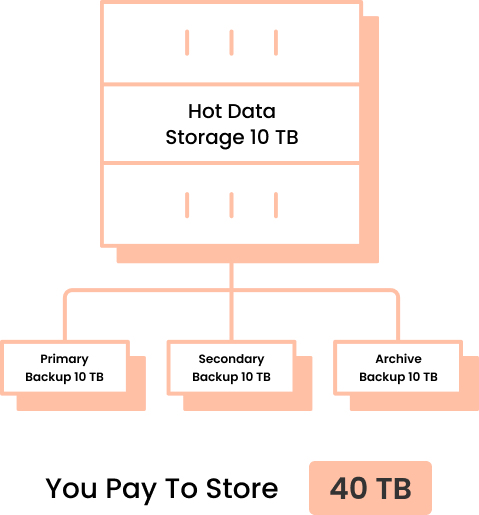
Most companies still use a 3-2-1 backup strategy that requires keeping four full copies of every single file. This bloats your storage overhead by 400% and hits you with hidden fees for moving data between regions, all while leaving your backups vulnerable to the same hackers who hit your main site.
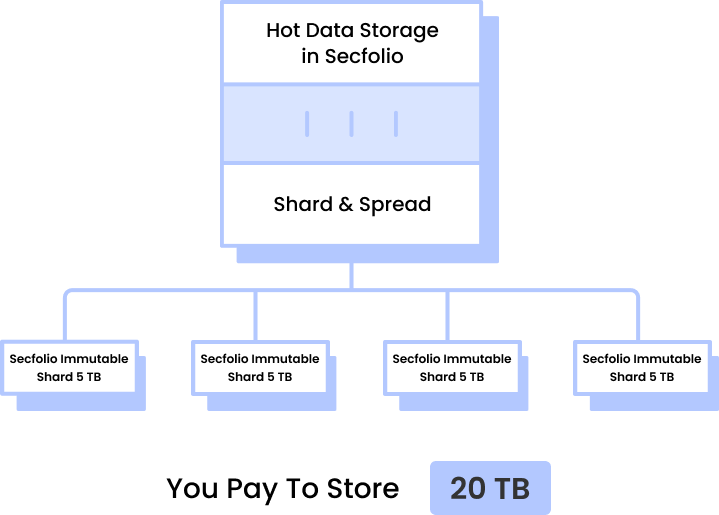
We’ve replaced redundant copies with intelligent fragments. By using Shard & Spread technology, we give you better cyber resilience while using half the storage space. You stop paying for "just in case" copies and start paying for data that is actually unhackable.
The Scenario: A massive cyberattack targets a national healthcare provider, attempting to corrupt all primary systems and backups to force a ransom payment.
Attackers find “digital dust” instead of files, neutralizing the ransom leverage and stopping the attack before it can disrupt care.
Because the stolen shards are cryptographically dead and unreadable, there is no threat of data leaks or extortion payments.